

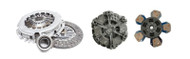
Mahindra Clutch Problems: 7 Issues You Shouldn’t Ignore
Posted by Reubicon Tractor Parts on 10th Mar 2026
Your Tractor Clutch controls how and when engine power is delivered to the transmission, ensuring smooth operation, safe gear changes, and precise control during demanding field work. Let’s dive in and learn more about this crucial component of your tractor’s drivetrain
The Tractor Clutch is the mechanical interface between the engine and the transmission. Its primary function is to temporarily disconnect engine power from the drivetrain, allowing the operator to:
- Start the tractor smoothly
- Shift gears without grinding
- Stop the movement without shutting off the engine
- Engage or disengage the PTO (on dual-stage systems)
When you depress the clutch pedal, the clutch disc separates from the flywheel, interrupting torque transfer. When you release the pedal, the disc re-engages the flywheel, restoring power flow to the transmission and, ultimately, the wheels and/or PTO shaft.
In practical terms, the clutch allows controlled power modulation. Without it, gear changes would damage the transmission, starts would be abrupt, and implement operation would be far less precise.
Does Your Tractor Clutch Need Replacement?
As with any tractor part, this essential engine component can experience issues, and if you notice the following signs, it might be time to head to our online store for a new aftermarket Mahindra Clutch or related Clutch Parts.
1. Clutch Slipping
Does your Mahindra tractor rev up, but the tractor doesn’t move proportionally to the force you exert on the pedal? If you notice this, especially when pulling an implement or climbing a slope, you may be experiencing clutch slippage.
Typically, this indicates that you have worn friction material, which is the lining bonded to the surface of the Clutch Disc. This lining creates controlled friction when pressed against the Flywheel and Pressure Plate. Over time, this material wears down, and when it can no longer grip properly, you experience clutch slippage.
If you notice the following, worn friction material is the likely culprit, and you will need to replace the Clutch Disc.
- Gradual onset of slipping over time
- Slipping is most noticeable under heavy load
- Higher engine RPM without matching ground speed
- Clutch pedal engagement point changes (often engages very high)
- No external fluid leaks are visible
It is usually recommended that you also replace the Pressure Plate and Release Bearing at this time, and you can find great deals on all of these items in our aftermarket Mahindra Parts Catalog Online.
Clutch slipping also can be caused by Pressure Plate failure. The Pressure Plate applies a clamping force that presses the Clutch Disc against the flywheel. If you notice clutch slippage all of a sudden, clutch vibration, metallic noises when engaging the clutch, or perhaps unusual pedal feel changes, the Pressure Plate may need to be replaced. However, as we recommended above, it’s wise to purchase a complete clutch kit and swap out all of these clutch parts.
Lastly, oil contamination can cause clutch slippage. If you notice a strong burning smell or see evidence of oil dripping, this is a strong sign that the oil is contaminated, which can cause the clutch to hydroplane instead of grip. You may also notice that the clutch grabs from time to time.
If oil contamination is the culprit, you will need to identify and repair the leak, which typically involves seal replacement. You also will need to attempt to clean the Clutch Disc. If this cannot be well cleaned, we recommend swapping in a new Clutch Disc. You also should inspect the Flywheel and Pressure Plate to ensure that these are still in good working order. Again, we offer affordable options for all of these Aftermarket Tractor Parts on our website.
2. Difficulty Shifting Gears
If you are struggling to shift gears smoothly or you notice grinding as you shift up or down, this means that your clutch is not fully disengaging. If the clutch does not fully separate from the flywheel, the transmission input shaft continues to spin, which leads to grinding. There could be several reasons why tractor clutches might experience this issue, including:
- Worn Clutch Disc Hub Spines – This prevents a smooth release from the input shaft
- Warped Clutch Disc – Causes drag even when the pedal is depressed
- Failing Release (throwout) Bearing – Incomplete disengagement
- Bent or worn Clutch Fork – Reduces travel distance
- Improper pedal free play adjustment – Not enough release movement
- Hydraulic Master Cylinder or Slave Cylinder failure (on hydraulic systems) – This causes insufficient fluid pressure
3. Burning Smells
If you notice a sharp, acrid smell, especially when under load, this can indicate that you have excessive friction heat and parts are rubbing together rather than locking together firmly. You will often notice the burning smells during heavy towing or loader work, and when climbing a steep grade or when riding the clutch.
This can occur if the Clutch Disc is worn because it can no longer grip effectively and slides instead of locking. This sliding creates heat, which causes the burning smell. Weak Pressure Plate Springs also can cause the Clutch Disc to slip, and this slipping leads to friction heat and burning smells.
Flywheel issues also may be present, and if this component no longer has enough friction material, this smoother surface reduces grip, even if you have a new disc. Additionally, as stated above, oil contamination on your Clutch Disc also can cause sliding and lead to burning smells.
4. Soft or Loose Clutch Pedal
When the pedal begins to feel “off,” this can indicate that you may have hydraulic issues or linkage problems, rather than issues with the Clutch Disc. The clutch pedal may feel spongy, loose, or soft, and this means the system is not transferring force properly from your pedal to the clutch assembly. There could be several reasons for this, including:
Air in the Hydraulic System – Hydraulic clutches rely on brake-style fluid pressure, and while this fluid does not compress, air does. If air enters the system, the pedals can feel soft and spongy, and shifting may become difficult. We recommend checking for leaks and perhaps flushing the hydraulic system. If any of these parts need replacement, we have a large selection of affordable aftermarket Mahindra Tractor Hydraulic Parts on our website.
Failing Master Cylinder – When you step down on the pedal, the Master Cylinder converts this motion into hydraulic pressure. If the cylinder seals are worn, this can cause the pressure to drop, and you may feel the pedal sink slowly to the floor. If this is the culprit, you may need a new Master Cylinder.
Failing Slave Cylinder – This component applies pressure to the Clutch Fork, and if it begins leaking or sticking, the clutch may not release fully, and you may experience sudden changes in the way the pedal operates. You also may notice fluid near the transmission housing.
Additionally, if you notice a soft or loose clutch, this issue could be caused by worn clutch linkage or worn linkage bushings, or perhaps a weak or broken return spring, and these will need to be replaced.
5. Clutch Pedal Sticking
While sometimes the pedal might feel soft or spongy, sometimes it can either stick down or return very slowly after being depressed. If the clutch does not fully re-engage, it can lead to continuous partial slipping and accelerated wear. When the pedal sticks, this can indicate that there are mechanical binding issues or some type of hydraulic issue, such as:
- Seized release bearing – This causes drag against the pressure plate fingers
- Binding clutch fork pivot – Likely caused by a lack of lubrication or wear
- Hydraulic slave cylinder sticking – Likely caused by internal corrosion
- A broken or weak return spring
- Debris inside the bell housing
Typically, you can replace each of these components independently. However, if there is debris in the bell housing that was due to a clutch failure, you likely will need a full clutch replacement. While this can be very costly, opting for our Aftermarket Mahindra Tractor Parts can save you a substantial sum.
Shop Now For Aftermarket Mahindra Tractor Clutch Parts
If you are experiencing tractor clutch issues and need a new Clutch Disc, Bushings, a Flywheel Assembly, or another of our related aftermarket Mahindra parts, we have everything you need to keep your Mahindra tractor in great shape.
Additionally, we also offer an affordable aftermarket John Deere Clutch Assembly, as well as an aftermarket PTO Disc, aftermarket Tractor Wheel Rims, and, if you need an aftermarket John Deere Air Filter, we carry a set with an inner and outer filter. We also stock a wide selection of aftermarket Case IH Parts and aftermarket Mahindra Roxor Parts. Whether you need a Tractor Clutch and Clutch Parts, or other components, we offer the lowest prices and the fastest shipping available.